“Just checked our analytics dashboard… again. Our most profitable enterprise deal this quarter came from a 6-month-old blog post. Not a sales call. Not an outbound campaign. A blog post.”
When I share this with case study with tech CEOs, they often dismiss it as an outlier.
Their perspective shifts when I show them that 65% of our qualified pipeline now comes from content we created over a year ago.
The real value isn’t in the immediate traffic spike – it’s in the compound interest of strategic content.
Last quarter, while reviewing our customer acquisition data, I noticed something remarkable: our customer acquisition cost had dropped by 40% year-over-year, even as we moved upmarket.
The source?
A content library that keeps selling while we sleep.
But these weren’t typical “10 Best Practices” listicles or generic thought leadership pieces.
In fact, they didn’t look like marketing content at all.
If you’re tired of pouring resources into content that generates fleeting traffic but no real business impact, let me show you a different approach.
One that turned three technical deep-dives into seven enterprise relationships, without a single “contact us” call-to-action…
Welcome to the art of scalable content assets.
The ROI Equation: Why Content Matters to Your Bottom Line
In a world where every marketing dollar is scrutinized, content marketing stands out as a uniquely efficient investment.
While traditional advertising depreciates instantly, content marketing creates lasting assets that continue generating returns long after creation.
Let’s talk numbers.
Unlike paid advertising where ROI diminishes the moment you stop spending, content assets appreciate over time:
- 77% of B2B tech buyers make purchase decisions based on educational content before ever talking to sales
- Companies with blogs generate 67% more leads than those without
- Content marketing costs 62% less than traditional marketing while generating 3x the leads
The Strategic Advantage: Content as a Moat
Your company’s IP isn’t just in your code—it’s in your thought leadership.
Content creates an intellectual property moat that’s harder to replicate than features.
Your content strategy serves two critical functions:
1 – Market Position Reinforcement
- Establish category leadership through deep technical insights
- Shape industry narratives before competitors do
- Build trust through demonstrated expertise
2- Sales Acceleration
- Reduce sales cycles by educating prospects pre-conversation
- Create scalable sales enablement assets
- Generate inbound leads 24/7
Implementation Framework: The Tech CEO’s Content Engine
Success in content marketing isn’t about random acts of content—it’s about building a systematic engine that consistently produces results.
Here’s your blueprint for creating that engine.
1. Content Strategy Alignment
Aligning your content strategy with the buyer journey is crucial for engaging potential customers effectively. It helps you with mapping topics that will resonate with them at a deeper level as well as ensure you are building features that will be needed.
Mapping Content to Buyer Journey
- Awareness Stage
- Technical trend analysis reports
- Industry benchmark studies
- Problem-focused whitepapers
- Consideration Stage
- Solution comparison guides
- Technical architecture deep-dives
- Integration capability documents
- Decision Stage
- Implementation playbooks
- ROI calculators
- Technical specifications
- Security compliance documentation
Tools for Journey Mapping
- HubSpot Content Strategy Tool
- Ahrefs Content Explorer
- SEMrush Topic Research
- Google Search Console for query analysis
High-Impact Technical Topics Selection
- Analyze support tickets for common technical questions
- Review sales team call recordings for technical objections
- Monitor GitHub discussions and Stack Overflow for trending issues
- Track competitor technical documentation gaps
Product Roadmap Alignment Process
- Create content calendar tied to feature releases
- Develop technical documentation simultaneously with product development
- Plan thought leadership pieces around upcoming innovations
- Schedule SME interviews before major releases
2. Resource Optimization
SME Content Creation System
Your Subject Matter Experts (SMEs) are your most valuable content source, but their time is precious.
Here’s a proven system to extract their insights efficiently while minimizing disruption to their core work.
The key is creating regular, structured touchpoints that fit naturally into their workflow, then maximizing the value of each interaction through smart documentation and repurposing.
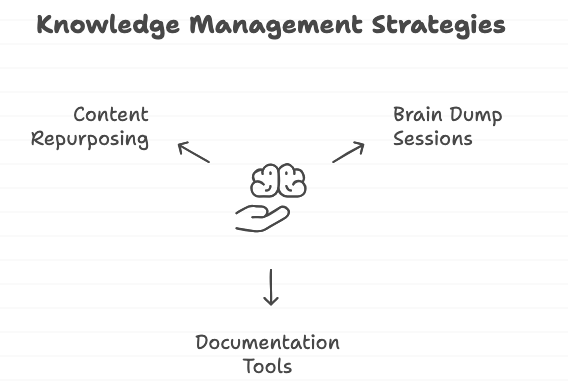
- Set up regular “brain dump” sessions
- Weekly 30-minute recordings
- Structured interview templates
- Topic backlog management
- Documentation Tools
- Notion for collaborative writing
- GitBook for technical documentation
- Loom for quick video captures
- Otter.ai for transcript generation
- Content Repurposing Framework
- Convert all-hands meetings to blog posts
- Transform product updates into use cases
- Split webinars into short-form content
- Create infographics from technical data
Customer Feedback to Content Pipeline
Transform your customer support interactions into powerful content assets.
Turn every customer question into a potential lead-generating piece of content by systematically capturing, analyzing, and converting support data into educational resources.
This automated pipeline ensures your content directly addresses real customer needs while reducing support load.
- Set up automated customer feedback collection
- Intercom for chat analysis
- UserVoice for feature requests
- Help desk ticket categorization
- Content Generation from FAQ
- Monthly FAQ review process
- Technical solution documentation
- Tutorial creation workflow
3. Distribution Channels
Producing content is not enough, you need to make sure it is discoverable on other platforms. Here are some content formats and channels to consider adding to your promo mix.
Technical Documentation Marketing
- SEO Optimization
- Technical keyword research
- Schema markup implementation
- API documentation indexing
- Code snippet optimization
- Documentation Platforms
- ReadMe.io
- Swagger
- GitBook
- DocuSaurus
Engineering Blog Strategy
- Content Types
- Architecture decisions
- Performance optimization cases
- Security implementations
- Scaling challenges solved
- Publishing Platform Setup
- Medium Engineering
- Company tech blog
- Dev.to community
- GitHub blog
LinkedIn Strategy
- Content Calendar
- Technical insights (2x weekly)
- Industry analysis (1x weekly)
- Team spotlights (1x monthly)
- Product updates (as released)
- Engagement Tools
- Buffer for scheduling
- Shield for analytics
- LinkedIn Sales Navigator for targeting
Conference Material Optimization
- Presentation Repurposing
- Convert slides to blog posts
- Create video snippets
- Extract key statistics
- Develop case studies
- Conference Tools
- Canva for presentations
- Pitch.com or Gamma.ai for deck creation
- StreamYard for virtual events
- Riverside for high-quality recordings
Content Types That Drive Tech Sales
Not all content is created equal, especially in the tech space. These are the formats proven to move prospects through your sales pipeline efficiently.
High-Converting Assets:
- Technical Whitepapers
- Deep dives into architecture
- Security protocols
- Performance benchmarks
- Case Studies
- Implementation specifics
- ROI metrics
- Technical challenges solved
- Product Documentation
- API documentation
- Integration guides
- Technical specifications
Rapid Content Creation System
Scale is everything in tech, and your content production needs to match your growth ambitions. This system helps you produce high-quality content consistently without draining your technical team’s resources.
Framework for Scale:
- Content Atomization
- Break long-form content into smaller pieces
- Create once, publish everywhere
- Repurpose internal documentation
- SME Involvement
- Regular brain dumps with technical leads
- Recorded product demos
- Engineering team contributions
Automation and Tools
- AI for content expansion
- Documentation generators
- Automated social sharing
LISTEN TO A PODCAST ON STRATEGIES TO TURN YOUR CONENT INTO A REVENUE-GENERATING MACHINE
Measuring Impact
What gets measured gets managed.
These are the metrics that matter for tech companies looking to quantify content ROI and optimize their strategy.
Key Metrics:
- Time on site for technical content
- Document downloads
- Sales cycle length
- Technical qualification rates
- Customer education scores
Implementation Timeline
Time is your scarcest resource. This 90-day plan helps you implement a content strategy without disrupting your core business operations.
90-Day Plan:
- Month 1: Content Audit and Strategy
- Month 2: Process Implementation
- Month 3: Distribution and Measurement
Common Pitfalls to Avoid
Learn from others’ mistakes. These are the most common ways tech companies sabotage their content efforts—and how to avoid them.
- Over-automation at the expense of authenticity
- Neglecting technical accuracy for speed
- Insufficient distribution strategy
- Poor alignment with sales process
The Competitive Edge
Content isn’t just about marketing—it’s about market leadership.
In the tech space, the winner isn’t just who has the best product—it’s who explains it best. Your content strategy is as crucial as your product strategy.
Action Items for Monday Morning:
- Audit existing technical content
- Map content gaps against sales objections
- Identify internal SMEs for content creation
- Set up content effectiveness metrics
- Schedule regular content planning sessions
Conclusion: The Compound Effect
Think of content like your codebase—it compounds in value over time. Every piece of content you create today becomes a permanent asset in your growth infrastructure.
The question isn’t whether to invest in content creation—it’s whether you’ll lead or follow in shaping your industry’s narrative.
Your competitors are already building their content moat. The best time to start was yesterday. The second best time is now.
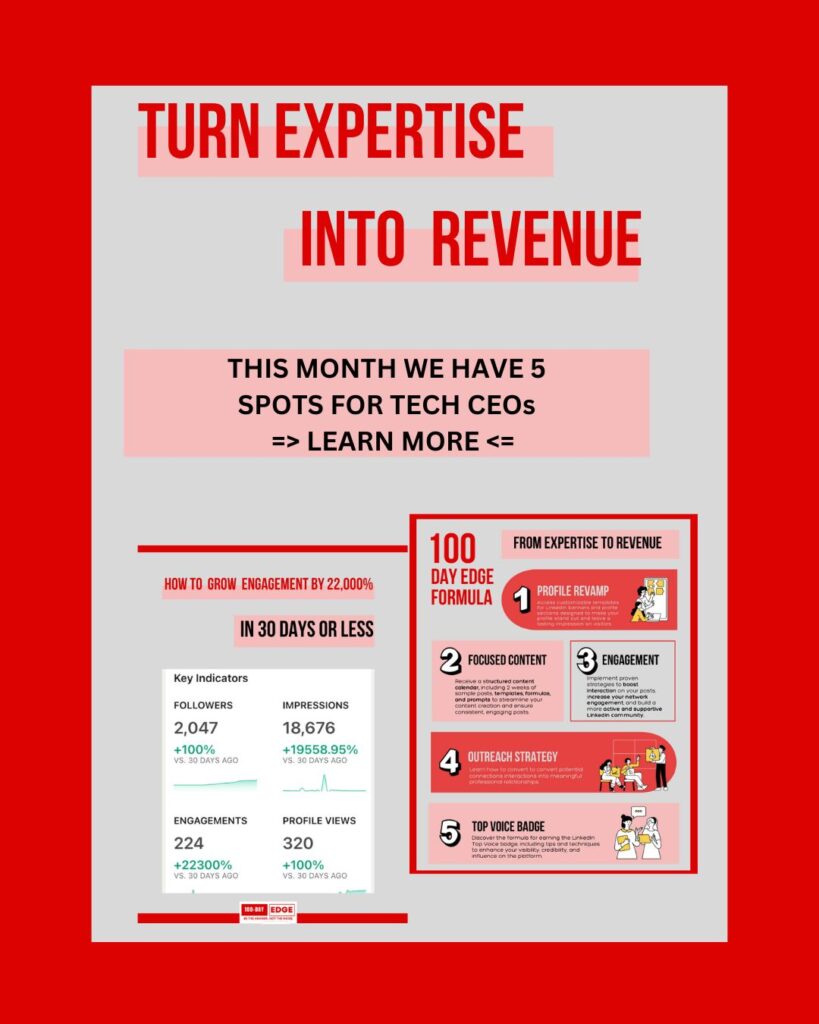
This month, my team is helping 5 technology leaders transform their expertise into tangible business results.
In 100 days, you’ll:
- Stage 1: Define your EDGE and optimize your online presence.
- Stage 2: Engage your tribe and land your first high-value client.
- Stage 3: Set your EDGE on fire with strategic content and recurring revenue.
Content That Sells FAQs
1. Why is content marketing important for tech companies?
Content marketing offers a unique and efficient way for tech companies to invest their marketing dollars. Unlike traditional advertising which has an immediate drop-off in ROI, content marketing creates assets that deliver continuous returns over time. In fact:
- 77% of B2B tech buyers rely on educational content to inform their purchase decisions.
- Companies who utilize blogs generate 67% more leads than those who don’t.
- Content marketing can cost up to 62% less than traditional marketing while generating 3 times the leads.
2. How can content act as a “moat” for my tech company?
Your company’s intellectual property isn’t limited to just your code, it extends to your thought leadership as well. Content helps establish this by:
- Reinforcing market position: Sharing deep technical insights and shaping industry narratives before your competitors can.
- Accelerating sales: Educating potential customers before they even speak to sales, and creating readily available sales enablement assets.
3. How do I align my content strategy with the buyer journey?
To effectively engage potential customers, it is crucial to create content that caters to each stage of their journey. Here are some examples:
Awareness Stage:
- Technical trend analysis reports
- Industry benchmark studies
- Problem-focused whitepapers
Consideration Stage:
- Solution comparison guides
- Technical architecture deep-dives
- Integration capability documents
Decision Stage:
- Implementation playbooks
- ROI calculators
- Technical specifications
- Security compliance documentation
4. How can I leverage Subject Matter Experts (SMEs) for content creation?
SMEs possess valuable insights but have limited time. To maximize their contribution:
- Implement structured touchpoints: Schedule regular short meetings with SMEs to capture their knowledge.
- Utilize documentation tools: Employ tools like Notion or GitBook for collaborative writing and Loom for quick video captures.
- Repurpose content: Transform all-hands meetings, product updates, and webinars into various formats like blog posts, use cases, and short-form videos.
5. Which content distribution channels are most effective for tech companies?
To reach your target audience, diversify your distribution strategy:
- Technical Documentation Marketing: Optimize your technical documentation for SEO and leverage platforms like ReadMe.io and Swagger.
- Engineering Blog Strategy: Share content related to architecture decisions, performance optimization, security implementations, and scaling challenges.
- LinkedIn Strategy: Publish regular technical insights, industry analysis, team spotlights, and product updates.
- Conference Material Optimization: Repurpose presentations into blog posts, video snippets, and case studies.
6. What types of content drive the highest conversions in tech sales?
Focus on content formats proven to be effective in moving prospects through your sales pipeline:
- Technical Whitepapers: Provide deep dives into technical aspects like architecture, security protocols, and performance benchmarks.
- Case Studies: Showcase implementation specifics, ROI metrics, and solutions to technical challenges.
- Product Documentation: Offer comprehensive API documentation, integration guides, and technical specifications.
7. How can I measure the impact of my content marketing efforts?
Track key metrics to determine the effectiveness of your content:
- Time on site for technical content: This indicates the level of engagement with your technical materials.
- Document downloads: Measure the demand for your resources and the interest in specific topics.
- Sales cycle length: Analyze if your content helps shorten the time it takes to close deals.
- Technical qualification rates: Assess how well your content educates prospects and improves lead quality.
- Customer education scores: Evaluate the effectiveness of your content in improving customer understanding and product adoption.
8. What are common pitfalls to avoid in tech content marketing?
Be aware of these mistakes and take steps to avoid them:
Poor alignment with sales process: Align your content strategy with your sales goals and provide sales teams with relevant materials.
Over-automation: While automation is helpful, ensure your content retains authenticity and a human touch.
Neglecting technical accuracy: Prioritize accuracy over speed to maintain credibility and trust with your audience.
Insufficient distribution: Create a comprehensive distribution plan to ensure your content reaches the right audience.